Outpost Cabins at Lake of the Ozarks State Park for First-Time Campers
An Outpost cabin can make a first camping trip feel less gear-intensive than sleeping in a tent, but “rustic” still calls for planning. At Lake of the Ozarks State Park, the key is to check what the cabin listing actually includes, bring what it doesn’t, and know how your group will handle meals, bathing and downtime.
What to expect from an Outpost cabin
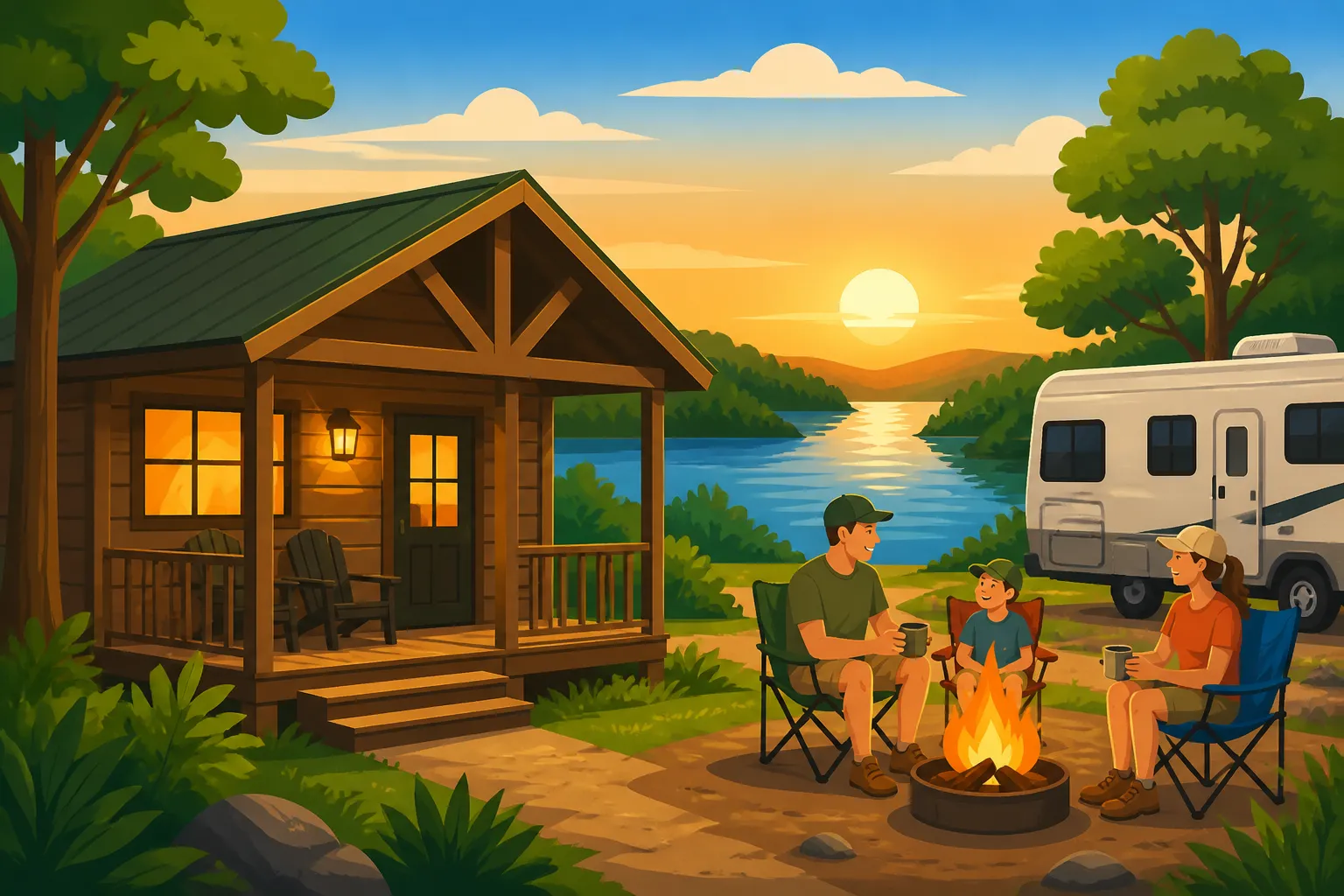
Missouri Department of Natural Resources describes Lake of the Ozarks State Park as having eight rustic log cabins. That gives you a small set of cabins to consider, but the name alone doesn’t tell you what furnishings, utilities or supplies you’ll find in an individual unit.
According to Missouri Department of Natural Resources, each Outpost cabin accommodates six people. Treat that as the maximum stated capacity, not a promise that every group will find the space equally comfortable. A group with children, bulky luggage or different sleep schedules may want to think through how it will use the shared space before choosing a cabin.
The agency lists the cabins as available year-round. That creates options beyond a warm-weather camping weekend, but the season can change what you need to bring and what services are convenient. For a cold-weather visit, ask whether the listing describes heat, water access and nearby facilities for your dates. For a warm-weather stay, consider shade, ventilation and how you’ll keep food and drinks cool.
“Rustic” is a useful signal to slow down and read the details rather than assume the cabin works like a fully equipped vacation rental. Don’t count on a kitchen, bathroom, linens, cooking equipment, or a particular type of bed unless the specific cabin information says so. If a feature matters to your group, confirm it before booking and make a backup plan if it isn’t provided.
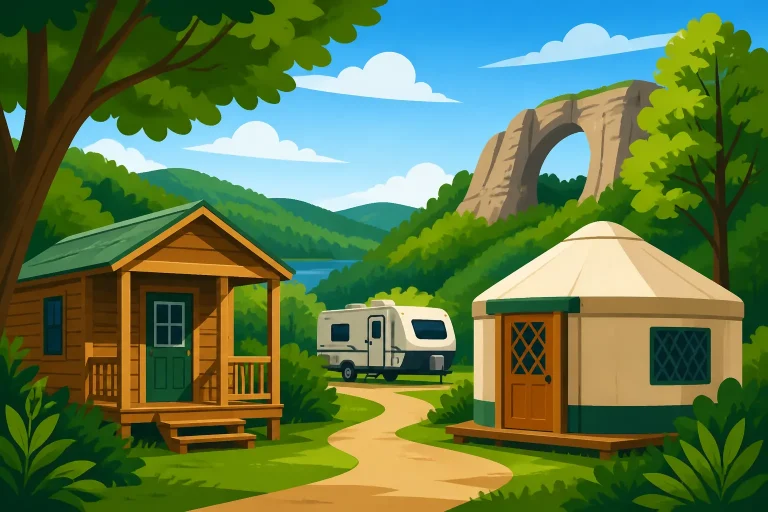
That distinction is especially helpful when comparing different kinds of park lodging. Outpost, Yurt or Camper Unit? Comparing Rustic Lodging Options can help you think about the type of stay you want, while What Is an Outpost Cabin at a Missouri State Park? focuses on the lodging category itself. For the Lake of the Ozarks cabins, let the current official listing settle questions about what is included in the unit you select.
A cabin can reduce the need to pitch a tent, but it doesn’t automatically remove the practical parts of camping. You may still need to bring food, personal supplies and suitable clothing, and you’ll still need to plan how to spend time outdoors. Set expectations with your group before leaving home: the cabin is a base for the trip, not necessarily a fully serviced indoor stay.
Check the listing before you choose dates
Start with the official Lake of the Ozarks State Park lodging listing and the reservation system used by Missouri State Parks. Read the description for the exact unit and your selected dates, not just a general page about Outpost cabins. Listings can be more useful when you check the specific amenities, occupancy details, photos and seasonal notes together.
If a detail is unclear, contact the park or reservation provider using current contact information from its official website. Ask focused questions rather than relying on a general assumption about rustic cabins. For example, you can ask what sleeping furniture is in the unit, whether you need to bring bedding, what cooking equipment is available, and where guests use the nearest restroom or shower facilities.
It also helps to check the booking conditions before committing. Look for the arrival and departure instructions, minimum-stay information, cancellation terms and any rules that affect your plans. These details can differ by lodging type or dates, so don’t assume that a rule you saw for a campsite automatically applies to an Outpost cabin. For broader context, see Minimum Stays for Missouri State Park Cabins, Yurts and Lodges and How to Book a Missouri State Park Campsite Online or by Phone.
Use a short checklist while reviewing the listing:
- Sleeping: What beds or other sleeping arrangements are described? What bedding, if any, should your group bring?
- Water and bathing: Is water available in the cabin, and where are the nearest restrooms and showers?
- Cooking: Does the listing describe a kitchen, appliances, dishes or cookware? If it doesn’t, ask before planning meals around those items.
- Climate: What heating or cooling features are listed, and what clothing will suit the forecast?
- Access: Is the route from parking to the cabin described? If anyone in your group has mobility needs, ask about the route and entry before reserving.
- Rules: What does the listing say about guests, pets, smoking, cooking and quiet expectations?
- Arrival: How do you check in, and what should you do if you expect to arrive late?
The checklist is not a substitute for the official listing. It helps you notice which details affect your plans and gives you questions to resolve while you still have time to adjust.
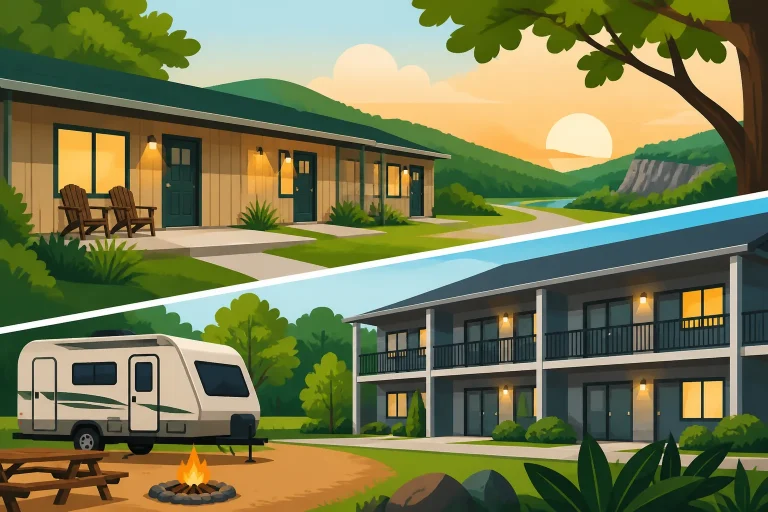
If you are comparing the cabin with a campsite or another lodging option, compare the actual amenities rather than the labels. A tent site may suit a group that has its own equipment and wants a conventional camp setup. Another cabin or yurt may suit someone looking for different indoor features. Camping in Missouri State Parks: How to Pick a Park and a Site offers a wider view of choosing a park stay, while the specific cabin listing should guide the final decision.
Pack for what the cabin does not promise
For a first stay, packing can feel harder than choosing dates because it’s easy to assume the cabin supplies more than it does. Build your list from the official unit description. If the listing does not clearly say an item is provided, decide whether to bring it, plan a substitute or ask the park.
Start with the basics that make a stay comfortable regardless of cabin furnishings: clothing suited to the weather, sleepwear, toiletries, personal medications, a flashlight or headlamp, chargers and any items needed by children. Keep the group’s essential items together so you can find them after arrival instead of unpacking every bag to locate one thing.
Bedding is worth checking early. Don’t assume that a cabin’s beds come with sheets, blankets or pillows. If you need to bring your own, match what you pack to the sleeping arrangements and the expected temperature. A sleeping bag or extra blanket can be useful if the listing allows it and your group prefers that setup, but first confirm what the beds are like and how the space is arranged.
Plan food only after you know what equipment is available. If the cabin listing doesn’t confirm a refrigerator, stove, microwave, dishes or utensils, don’t build a menu that depends on them. Consider meals that are easy to transport and serve with the equipment you can confirm. If you plan to cook outdoors, check the park’s current rules and the cabin’s specific instructions before packing a stove or other cooking device.
A simple meal plan can keep the trip relaxed:
- Choose food that fits the confirmed cooking and storage options.
- Bring drinking water if you have not confirmed where and how water is available.
- Pack serving items and utensils if the listing does not state that they are supplied.
- Bring a cooler only if you can manage its size and keep it safely stored.
- Keep meals flexible in case weather or equipment changes your outdoor plans.
Don’t forget the small items that can make a rustic stay easier: a reusable bag for dirty clothes, a small first-aid kit, insect protection, sunscreen, extra layers and shoes suitable for walking outdoors. Whether each item is useful depends on the season and your itinerary, so check the forecast and the park’s current notices before you go.
For a more detailed packing approach, What to Bring for a Night in a Missouri Park Camper Cabin? can prompt useful questions, but verify that every suggestion fits the Outpost cabin you booked. A camper cabin and an Outpost cabin should not be treated as interchangeable simply because both are cabins. Similarly, No Running Water in a Rustic Park Cabin: How to Plan Around It is a helpful planning topic, not a reason to assume the Lake of the Ozarks unit lacks water. Confirm the specific listing before you decide what to carry.
Make arrival, meals and downtime easy
Before departure, save your reservation details and the arrival instructions where you can access them without relying on a strong phone signal. Check the park’s official information for current closures or changes that could affect your route or plans. If you expect to arrive near dark, pack a light where it’s easy to reach and make sure everyone knows what to do if the group is separated during unloading.
Once you reach the cabin, take a few minutes to orient yourself before unpacking. Locate the sleeping area, check the listed amenities against what you see, and identify the route to the facilities you expect to use. If something important is missing or does not match the listing, contact the park through the official contact details rather than trying to improvise around a safety or access concern.
Set up the cabin around the group’s routine. Keep frequently used items together, designate a spot for shoes and wet clothing, and avoid bringing more gear inside than the space can comfortably hold. If different people will be sleeping or getting ready at different times, agree on a simple routine before the first night. These small choices can prevent a compact shared space from feeling crowded.
Meals are easier when they fit the facilities you confirmed. If there is no verified way to prepare a particular dish, choose a simpler meal rather than assuming an appliance will be available. Keep food and cooking supplies organized, follow the cabin and park rules, and clean up after meals so the space remains usable for everyone in your group.
Build a loose plan for time outside, but keep it adaptable. A cabin stay can include trails, scenic stops or time at the water, depending on your interests and current conditions. Check park information before setting out, and don’t treat a cabin reservation as confirmation that every nearby activity or facility will be open. If weather changes, have an indoor or low-key alternative, such as board games, reading or a relaxed meal.
For a smooth departure, check the cabin’s checkout instructions and leave enough time to follow them. Don’t assume that cabin cleanup matches a campsite routine or another lodging property’s policy. Review what the reservation information says about dishes, trash, linens and locking up, and ask the park if any instruction is unclear. Cabin Etiquette at Missouri State Parks, From Arrival to Checkout is useful background, but the instructions for your reserved unit take priority.
Decide whether an Outpost cabin suits your group
An Outpost cabin can be a good fit if your group wants a sheltered place to sleep and is comfortable planning around a rustic setup. It may be less suitable if you need fully equipped indoor facilities and can’t confirm that the unit provides them. The right choice depends less on the cabin name than on the specific amenities, the group’s needs and how much gear you’re willing to bring.
| Your priority | What to check before reserving | A practical next step |
|---|---|---|
| A simpler alternative to tent sleeping | Sleeping arrangements and what bedding is provided | Confirm the unit details and pack only after checking |
| Cooking inside | Appliances, cookware, dishes and food storage | Ask the park if the listing is unclear; plan a backup meal |
| Easy access to bathing facilities | Restroom and shower locations, access and seasonal details | Confirm the nearest facilities for your dates |
| A comfortable stay in cold or hot weather | Heating or cooling features and seasonal operating notes | Check the listing and forecast, then pack suitable layers |
| Enough room for everyone | The cabin’s stated capacity and the group’s sleeping needs | Think through how your party will share the space |
| A stay that works for varied mobility needs | Parking, paths, entry and interior layout | Ask the park about the route and specific access needs |
A group that needs more indoor amenities may want to compare other lodging types before deciding. Housekeeping Cabins With Kitchens at Missouri State Parks can help clarify what to look for in a more equipped option, while Camper Cabins and Yurts in Missouri State Parks: Where to Find Them gives context on other rustic stays. Compare actual unit descriptions rather than expecting one category to include features listed for another.
Think about the people in your group as well as the equipment. A cabin’s stated capacity tells you the maximum occupancy, but not whether the arrangement works for a particular family, friends with different sleep schedules or people who need extra space. If a group member depends on a specific feature, such as an accessible route, a private bathroom or a certain sleeping arrangement, verify that feature directly before you reserve.
The year-round availability creates flexibility, but it also makes date-specific planning important. A stay in a warmer period may call for sun protection and a plan for keeping food cool; a colder visit may require additional layers and questions about heat and nearby services. The official listing and current park information are the best starting points for matching your expectations to the conditions.
For first-time campers, the simplest strategy is to resolve the essentials before packing: sleeping, water, bathing, cooking, climate and arrival. Once those are clear, the rest of the trip becomes easier to plan. If the listing leaves a key question unanswered, ask before booking rather than discovering the gap after you arrive.
Frequently Asked Questions
Are the Outpost cabins available throughout the year?
Missouri Department of Natural Resources lists them as year-round rentals. Check the official listing for the dates you want and review any seasonal notes that could affect your stay.
How many people can stay in one cabin?
Missouri Department of Natural Resources states that each cabin accommodates up to six people. Consider whether the sleeping arrangement and shared space suit your group, not just whether everyone fits within the stated capacity.
Should I bring bedding and cooking supplies?
Check the official description for the specific cabin. Bring bedding or cooking items if they are not clearly listed as provided, and ask the park about any detail that affects your plans.
Is an Outpost cabin the same as a fully equipped cabin?
Don’t assume so. Compare the listed amenities for the particular lodging unit with what your group needs, and consider another lodging type if the Outpost listing does not describe the features you require.
Sources
- Missouri Department of Natural Resources — Lodging – Lake of the Ozarks State Park | Missouri State Parks (checked November 23, 2026)
Disclaimer
This article is for general informational purposes only and does not constitute professional advice. Laws, prices and regulations vary by location and change over time. Consult a qualified professional for guidance on your specific situation. Missouri Camping & RV is not a government agency and is not affiliated with any government agency.