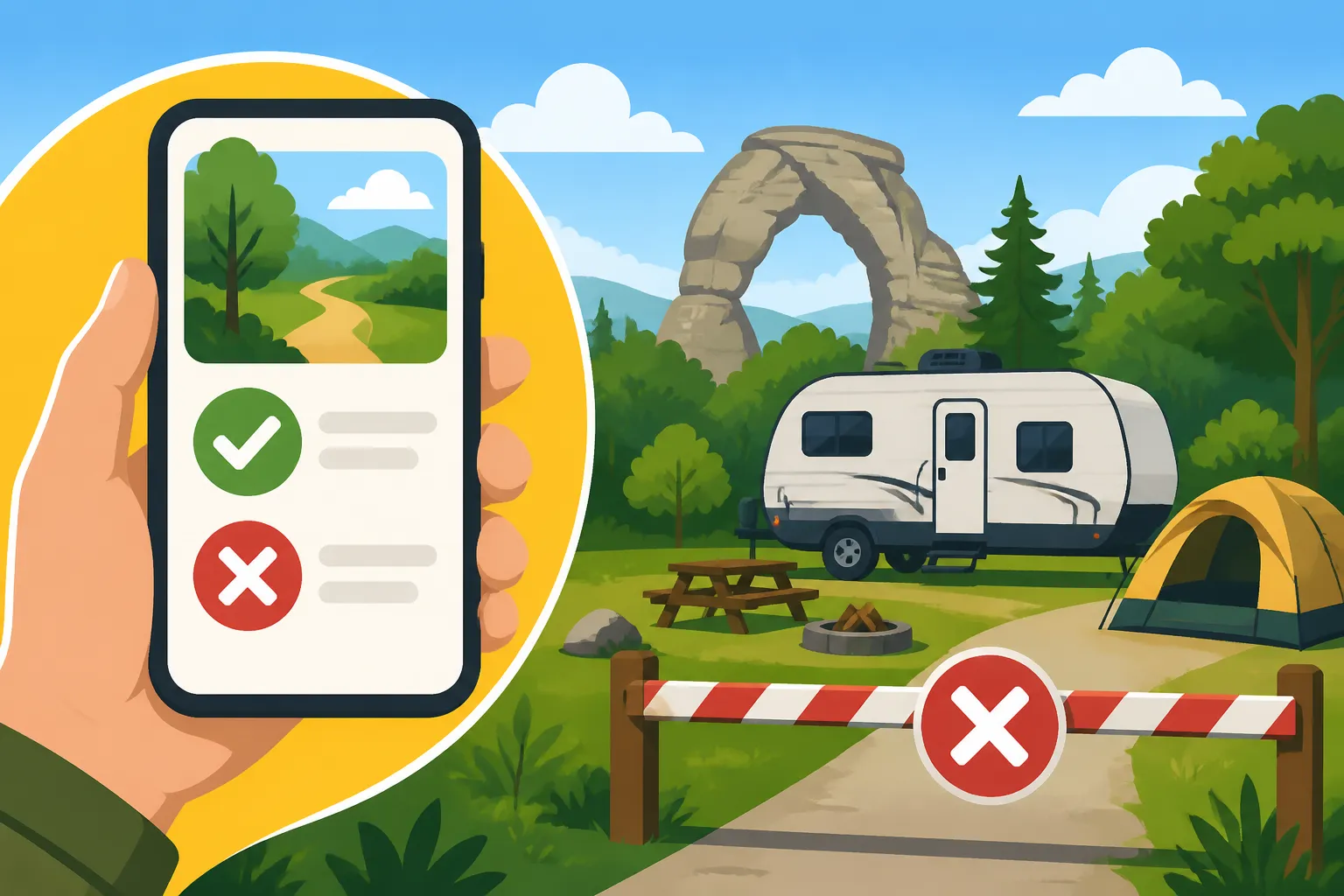
Checking a Missouri State Park’s Status and Closures Before You Go
A park name on your itinerary does not guarantee that the campground, trail, swimming area, or other place you planned to use will be available when you arrive. Missouri State Parks can have temporary closures for different reasons, and it is easy to mistake a closure notice for a complete park shutdown. Here’s how to check the official information, judge what it means for your plans, and make a sensible backup plan.
Start with the official Park and Site Status Map
Before setting out, check the official Missouri State Parks information for the specific park you plan to visit. The Missouri Department of Natural Resources directs visitors to its Park and Site Status Map for temporary closures, including weather-, stewardship-, and maintenance-related closures. The Missouri Department of Natural Resources also says the Park and Site Status Map provides information about temporary closures related to weather, stewardship activities, maintenance, and trails.
Those notices can matter even when your destination is open in a general sense. A closure affecting one trail, facility, or part of a park may change the day you planned without necessarily making every other activity unavailable. Conversely, a closure that affects the central feature of your trip may mean that going ahead no longer makes sense. Read each notice rather than relying on the park’s name, a familiar photo, or an old trip plan.
Use the status information as a trip-planning tool, not just a final check before leaving home. If a notice appears, identify the place or activity it concerns, consider what that means for your itinerary, and look for an official update if the notice is unclear. A map can help you spot a potential issue, but a map symbol alone may not explain the practical effect on your visit. Read the accompanying notice and confirm details with the park when you need clarification.
It is also worth checking the status information again close to departure. Temporary conditions can change, and a check made well in advance may not reflect what you will encounter on the day of your visit. For a longer drive or a trip built around one particular activity, make another check before leaving. If you are already nearby, check again before changing your route or assuming a closure has ended.
The status map is one part of trip planning, alongside the campground listing, the park’s general information, and the details of your reservation if you have one. It is not a substitute for checking whether the specific site or accommodation you chose is suitable for your group. For help comparing park features before you pick a destination, see Camping in Missouri State Parks: How to Pick a Park and a Site. If you need to understand the booking process, see How to Book a Missouri State Park Campsite Online or by Phone.
Identify what is closed and what your trip depends on
The most useful question is not simply, “Is the park open?” It is, “Is the place or activity I need available?” A visit may depend on a campsite, a particular trail, a swimming area, a picnic spot, or access to a facility. A notice about one feature does not automatically answer questions about the rest of the park, so avoid treating every closure as either a full shutdown or a minor inconvenience.
Start by writing down the parts of the visit that are essential and the parts that are optional. If you are camping, the booked campsite and your arrival plan may be essential. If your trip is mainly about a particular trail, access to that trail could be the deciding factor. If the visit is flexible, you may be able to replace one activity with a different park experience. This simple distinction helps you respond to the actual notice instead of making a rushed, all-or-nothing decision.
When you find a closure notice, work through these questions:
- Which place or activity does the notice identify? Match the wording to your plan. Do not assume that a notice covering one trail applies to every trail, or that a notice about one facility means all facilities are unavailable.
- What part of your itinerary relies on it? If the affected feature is the main reason for your trip, you may need a different destination or date. If it is one optional stop, you may be able to keep the visit and adjust the day.
- Does the notice explain the impact? Read the full information available through the official status listing. If the practical effect is not clear, contact the individual park using its official contact information.
- Could the notice affect your route or arrival? If the area you planned to use is not available, check whether your alternative still makes sense for your group, equipment, and schedule.
- What would make you change the plan? Decide in advance whether a closure of a key feature means postponing, choosing another park, or continuing with a different activity.
Closures can arise from weather, stewardship work, maintenance, or trail conditions, so the reason may affect how you think about alternatives. A weather-related notice may lead you to reconsider outdoor plans, while maintenance or stewardship work may affect a particular place or activity. Treat the notice itself as the authority for what is unavailable; do not guess at an end date or assume that a location has reopened because conditions look better elsewhere.
If your plans involve trails, the article Temporary Trail and Campground Closures at Missouri Parks can help you think through how a closure may affect an overnight trip. If water levels or swimming are central to the visit, see When High Water Closes a Missouri Park’s Swimming Area. Those topics can help frame your decisions, but check the official status information for the park you are visiting.
Check again at the right points in your planning
A useful status check is not a one-time task. The timing should match how much your trip depends on conditions that can change. A day visitor with several possible activities may be able to adapt easily. Someone who has traveled a long distance for a specific trail, campsite, or water-based activity has more reason to verify the details close to departure.
Use a simple sequence:
- While choosing a destination: Check whether the park’s status information already identifies a closure that conflicts with your main reason for going. If it does, compare alternatives before committing to a plan.
- After arranging the trip: Revisit the official information before you finalize the details. This is especially useful when a particular feature is essential or your group has limited flexibility.
- Before you leave: Make a fresh check so that a notice that appeared after your earlier planning does not catch you by surprise.
- When you arrive: Check the park’s posted information and ask park staff about anything that remains uncertain. The posted information may clarify conditions or rules that affect your activities.
Think about the cost of being wrong, too. If a closed feature would leave your group with no workable activity, make a backup plan before traveling. If you would still enjoy the visit without it, you may be comfortable proceeding after you understand the notice. The point is not to cancel whenever you see a closure; it is to make the decision with the relevant details in view.
For a camping trip, keep status checks separate from reservation checks. A reservation confirmation tells you about the booking, but it is not a general guarantee that every nearby activity will be available. Likewise, a closure notice about an activity does not, by itself, tell you whether a reservation has changed. If a notice could affect your lodging or campsite, review the official booking information and contact the park or the appropriate reservation service for instructions.
A practical way to stay organized is to keep a short trip note with your planned campsite or lodging, essential activities, the official status page you checked, and your backup option. You do not need to turn planning into paperwork. A few details can simply make it easier to compare what you expected with what is posted when you arrive.
If your plans depend on access to a particular campground loop or facility, use the park’s official information rather than assuming that a general map or an older trip report describes current conditions. Reading a Missouri Park Map to Find Your Campground Loop may help with the map-planning side of a camping visit. For broader advice on timing a visit around changing seasons, see Missouri State Parks Through the Year: Planning Around the On-Season.
Understand what a closure notice can and cannot tell you
A closure notice is useful because it identifies an issue that could affect access or activities. It may not answer every question you have about the rest of your visit. For example, a notice may tell you that a particular feature is closed without explaining whether another nearby option is suitable for your group. Do not fill gaps in the notice with assumptions. If the remaining details matter to your decision, ask the individual park.
Keep these distinctions in mind:
- A closed feature is not automatically the same as a closed park. Read what the notice names and check for any separate information about access or other areas.
- A park’s general availability is not a promise that every feature is available. Check the status of the specific place or activity you plan to use.
- A temporary notice is not a reliable prediction of when a place will reopen. Do not infer a reopening date unless the official information gives one.
- A map marker or short description may not provide enough context on its own. Read the full notice where available and seek clarification if its scope is uncertain.
- An old description may not match current conditions. Use official current information for the decision you are making today.
A closure may also affect visitors differently. A closed trail could be a major problem for someone who came specifically to hike it, while another visitor may be content to spend the day elsewhere in the park. A facility closure may matter more to a visitor who needs that facility than to someone who does not plan to use it. When deciding whether to go, consider the needs of everyone in your group, not just whether the park remains a worthwhile destination in general.
If accessibility, a specific amenity, or a particular route is important, be precise when asking for clarification. Instead of asking only whether the park is open, ask whether the location or facility you need is available and whether the notice changes the route you planned to use. A specific question is more likely to produce a useful answer than a broad question about the park as a whole.
Avoid relying on unofficial posts as proof that a closure has ended. A visitor may have shared accurate information for the day they were there, but conditions can change, and the post may not describe the same area you plan to visit. Use personal accounts as background if helpful, but make the decision based on current official information and any clarification from the park.
For rules that are not closure notices, check the park’s own guidance as well. The Missouri Department of Natural Resources says rules and policies can vary by park, so campers should contact the individual park and check the park’s bulletin boards for additional rules. A status check and a rules check answer different questions: one helps you understand temporary availability, while the other helps you understand what applies to your visit.
Make a backup plan that fits the kind of trip
A backup plan should be realistic, not just a second destination written down in a hurry. Think through what you can change without disrupting the whole visit. You might shift the order of activities, spend more time on an available option, visit a different part of the park, or choose another destination. Which alternative works depends on the reason for the closure and the needs of your group.
For a day visit, a flexible itinerary is often enough. Choose more than one activity that would make the trip worthwhile, and avoid building the entire day around a feature whose status you have not checked. If a notice rules out the main activity, decide whether the remaining options still justify the drive. If they do not, changing the destination or postponing may be more satisfying than arriving disappointed.
For an overnight visit, consider both the reserved stay and the activities around it. If a trail is closed, your lodging may still be usable, but the trip may no longer meet its purpose. If the notice could affect the campsite or lodging itself, do not assume that you can simply arrive and sort it out at the gate. Review the official reservation information and ask the park or reservation service what the notice means for your booking.
If you choose an alternate park, check that park’s status information too. Switching destinations does not remove the need to verify conditions. Compare the features that matter to your group, the travel involved, and whether the alternative addresses the reason for the trip. Backup Plans for a Rainy Weekend at a Missouri State Park Campout offers ideas for adapting a camping weekend when outdoor plans need to change.
It can help to make the alternative decision before you leave rather than while everyone is waiting in the car. Agree on what would trigger a change of plan: for example, a notice that affects the activity you most want to do, uncertainty about a required facility, or a closure that makes your route impractical. The exact threshold is personal. A family with a short drive and flexible schedule may decide differently from a group traveling farther for one specific feature.
Keep expectations measured. A backup activity is not a promise that every part of the day will go as planned. It is a way to avoid having one closure dictate the entire visit. If the status information leaves an important question unanswered, confirm the detail before departing rather than making a long drive based on a guess.
Check park-specific details when you arrive
The drive to the park does not replace a final check. Once you arrive, take time to review the park’s current posted information and ask staff about details that remain unclear. This matters because the most useful information for your visit may be specific to the park, the place you plan to use, or the rules that apply to your activity.
The Missouri Department of Natural Resources advises campers to contact the individual park and check its bulletin boards for additional rules because rules and policies can vary by park. Treat that as a separate step from reviewing the Park and Site Status Map. The map helps you identify temporary closures; the park’s own information can help clarify local rules and conditions you need to follow.
On arrival, confirm practical details that could affect how you use the park. If you are heading to a campground, make sure you know where you are expected to go and whether any posted information affects the route or area you planned to use. If you are going to a trail or other recreation area, look for current notices before setting out. If something appears different from the status information you checked, pause and ask park staff rather than relying on a guess.
Do not treat a sign, map, or bulletin board as an inconvenience to work around. A closure or instruction is there to communicate that access or use has changed. If you are unsure whether a notice applies to your plan, ask for clarification. Do not enter a closed area or assume that a barrier is optional because the destination seems close.
Keep any relevant details available while you are in the park. If your group separates or changes plans, make sure everyone understands which areas are unavailable and where to find the official posted information. This is particularly helpful when a trip includes several activities or when not everyone arrives together.
For other practical details about expectations at campgrounds, see Campground Rules at Missouri State Parks: A Practical Overview. For a wider discussion of temporary status checks, posted information, and how to prepare before a visit, Park Status Map vs. Bulletin Board: Two Places to Check Rules is also relevant.
A quick decision process before departure
When you are short on time, use this checklist to turn a status check into a clear decision:
- Name the trip’s main purpose. Decide what would make the visit worthwhile and which parts are optional.
- Check the official Park and Site Status Map. Look for a notice that applies to the park, area, facility, or activity you plan to use.
- Read the notice carefully. Note what it identifies and what it does not say. Do not assume that a closure applies more broadly or ends sooner than the official information indicates.
- Compare the notice with your itinerary. Work out whether the affected feature is essential, replaceable, or unrelated to your plans.
- Ask the park if a key detail is unclear. Use the individual park’s official contact information when you need clarification about local conditions or rules.
- Check your booking separately if you are staying overnight. Do not treat an activity notice as an automatic change to a reservation, or a reservation as proof that every activity is available.
- Choose a backup. Decide whether to adjust your day, switch destinations, or postpone if the closure affects the main reason for going.
- Check again before leaving and at arrival. Review current official information, then look for posted park notices when you get there.
This process is meant to prevent two common mistakes: abandoning a visit because one feature is unavailable, and going ahead without noticing that the unavailable feature is central to the trip. The right choice depends on the specific notice and your priorities.
If the official information is clear and the closure does not affect what you need, you may decide to continue with your plan. If it changes the purpose of the trip, revise the itinerary before traveling. If the notice is unclear and the uncertainty matters, contact the individual park. When you arrive, check posted information again and follow the park’s current directions.
A little preparation can save a frustrating drive, but it also helps set realistic expectations. Missouri State Parks offer different activities and facilities, and temporary conditions may affect only part of a visit. Check the official map, match the notice to your actual plans, confirm questions with the park, and keep a workable alternative ready.
Frequently Asked Questions
Does a closure notice mean the whole park is closed?
Not necessarily. Read the notice to see which place or activity it identifies, then check for separate information about other parts of your visit. Ask the individual park if the notice does not make its scope clear.
When should I check the status information?
Check while planning, again before you leave, and when you arrive. A check well in advance may not reflect later conditions, so revisit the official information close to your trip.
What should I do if a notice conflicts with my campsite reservation?
Check the reservation information separately and contact the park or the appropriate reservation service for instructions. Do not assume that a closure notice automatically changes a booking or that a booking guarantees access to every nearby activity.
Where can I find park-specific rules?
According to the Missouri Department of Natural Resources, campers should contact the individual park and check its bulletin boards for additional rules, since policies can vary by park.
Sources
- Missouri Department of Natural Resources — Camping – Bennett Spring | Missouri State Parks (checked November 23, 2026)
- Missouri Department of Natural Resources — Camping – Meramec State Park | Missouri State Parks (checked November 23, 2026)
- Missouri Department of Natural Resources — Camping | Missouri State Parks (checked November 23, 2026)
Disclaimer
This article is for general informational purposes only and does not constitute professional advice. Laws, prices and regulations vary by location and change over time. Consult a qualified professional for guidance on your specific situation. Missouri Camping & RV is not a government agency and is not affiliated with any government agency.